
Stories Folded in Cloth: Ana Buzzalino and the Art of Textile Memory
Ana Buzzalino grew up without a television. Her parents believed—firmly, deliberately—that a TV in the house would be the end of conversation. “My parents refused to purchase a TV because then they had the idea that we would never talk,” she says. Her father held out until both daughters had left home. “Then they bought a TV.”
In its place, there were books. Growing up in Buenos Aires, Argentina, Buzzalino saved her allowance for the bookstore. The owner knew her by name, knew her tastes, saved titles she thought Buzzalino would want. “She would save them for me because she knew that I would show up at the beginning of the month.” She still reads that way—hungrily, across traditions. Murder mysteries for pleasure. Mary Oliver for the quality of attention she brings to the natural world. The Spanish-language poets who shaped her early sense of what language could do.
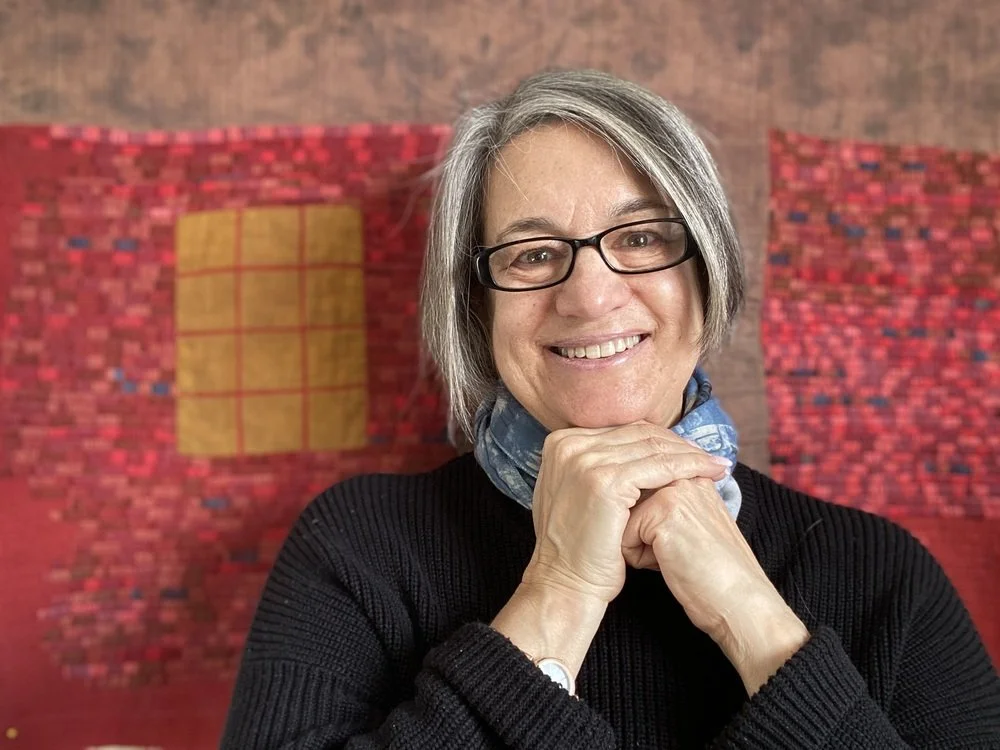
Ana Buzzalino
Books weren’t the only inheritance. Her great-aunt Yente was one of Latin America’s pioneering abstract painters—“one of the first women to paint abstract in Latin America,” Buzzalino says. Her aunt Marilyn became “very famous in Latin America and throughout Europe for her engravings,” working from the poems of Jorge Luis Borges. And her grandmother, whose own mother had fled Russia to escape persecution, raised her family in a New York apartment by sewing wedding gowns.
Buzzalino’s now a fiber and mixed media artist based in Calgary, Alberta. She makes concertina books from vintage fabric, lace, and textile heirlooms. The reading, the making, the family history—it’s always felt like a single, continuous thread.
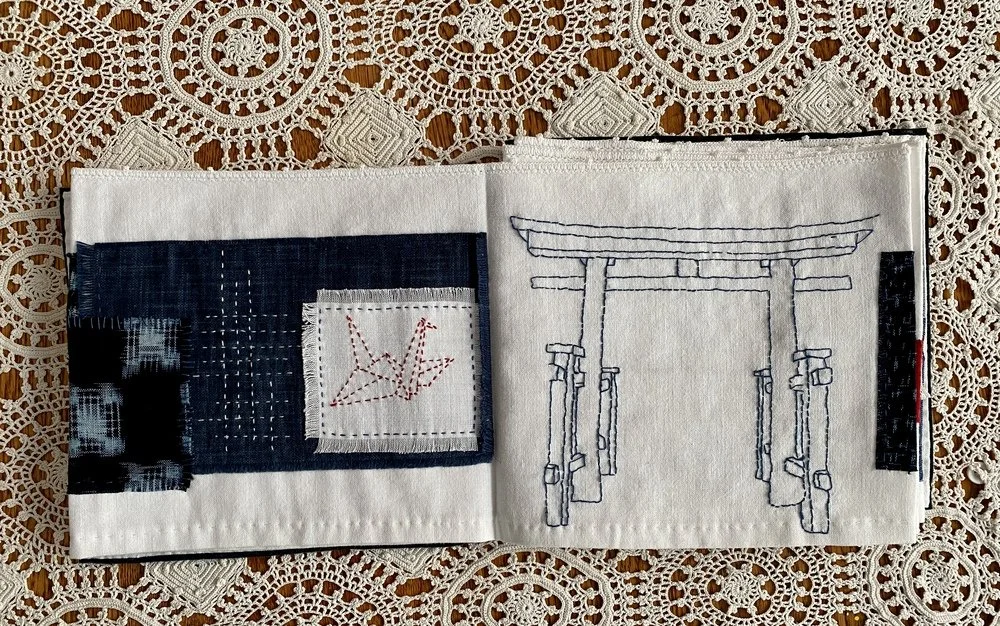
Ana’s Concertina Book Inspired by Her Trip to Japan
A Quilt Store, and Then Something Else
When Buzzalino first arrived in Canada, she walked into a quilt store on a whim. Then, she became a serious quilter. Her work earned international recognition—first prize in the Abstract category at the International Quilt Festival in Houston, multiple awards at Quilt Canada, appearances in Quilting Arts Magazine and on Quilting Arts TV.
And then something shifted. “I have about 250 quilts in my basement that have never sold,” she says, with the equanimity of someone who’s already made her peace with this. The math was actually freeing: she could make what she loved.
She began working by hand—first individual fabric pages, small and intimate, sewn rather than quilted. Then, a few years ago, she discovered the concertina book through a workshop with British textile artist Mandy Patullo, offered through the online platform Stitch Club. Patullo works small, by hand, building pieces from vintage and antique fabrics and laces. Something in that approach spoke directly to Buzzalino.
“It was almost like coming home,” she says. “Really, like everything came full circle.”
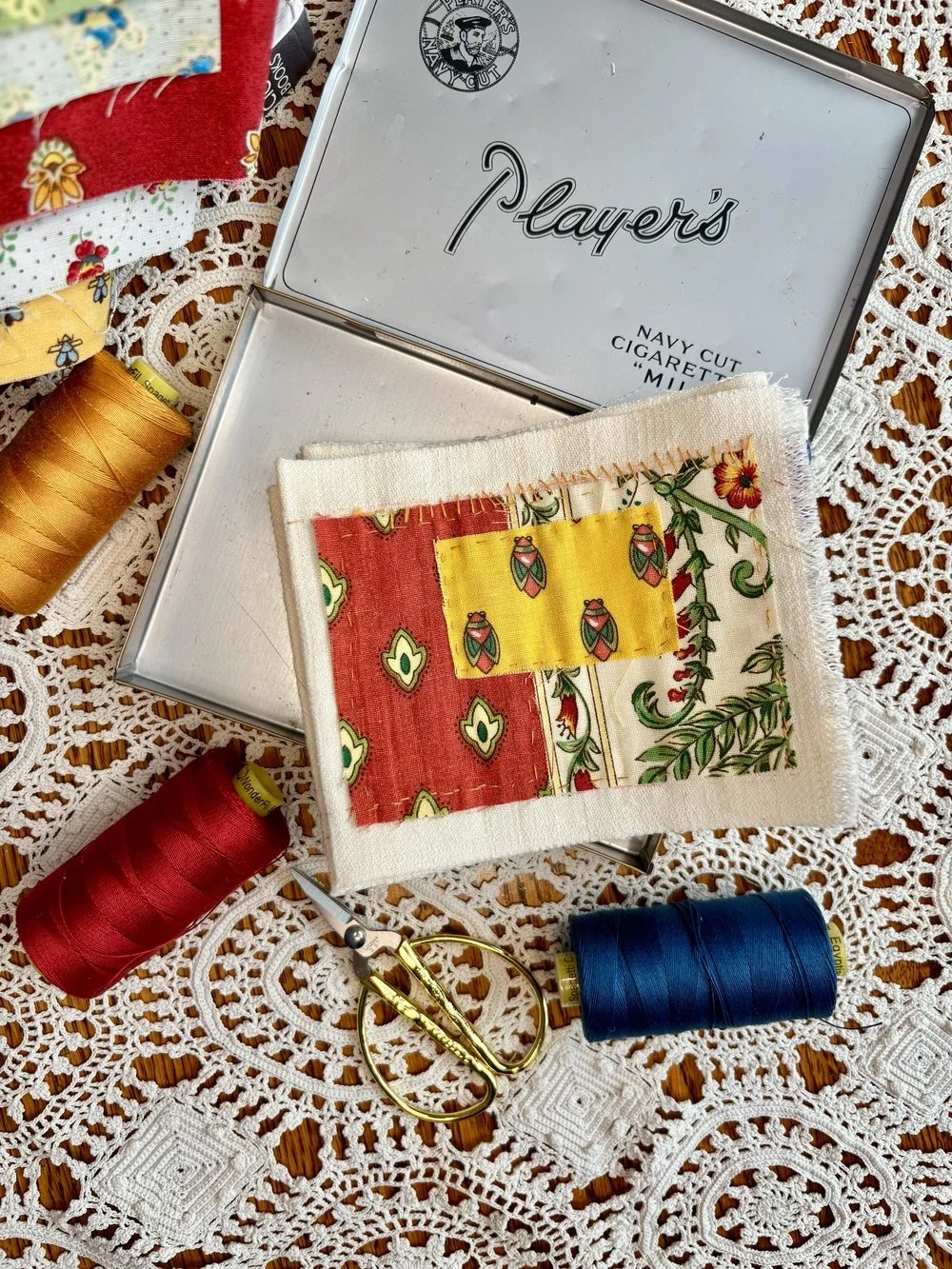
A Page From Ana’s France Book
Inspired by Provence.
What the Fabric Knows
The concertina is an accordion-fold structure—panels connected in sequence, opening into one long continuous surface. There’s no fixed beginning or end. There’s only the unfolding.
Buzzalino works primarily with vintage tablecloths, lace, and inherited textiles. She keeps the stains. She keeps the mending. She keeps the evidence of every hand that touched the cloth before her own.
“I want the stains,” she says, “because they are part of it being lived. They have a life. All these vintage tablecloths that I purchase, or that people have given me—they could tell stories. Somebody made them. Somebody used them.”
She tells the story of a French tablecloth her grandfather brought back from France by boat for her grandmother. Her grandmother never used it—“because it was probably too good to use.” It passed to Buzzalino’s mother, who also never used it. Then to Buzzalino herself.
“One day I thought, okay, this is dumb. I need to use this.”
That tablecloth became a book. Each piece she makes documents something specific—a trip to Japan and time spent with her son, the warmth of a French Provençal textile tradition. Her scroll, titled Come Sit With Me, began as a personal piece before becoming a kit and a class: its title an open invitation, the kind that implies a chair pulled close and a story about to begin.
The work’s slow by design. Buzzalino hand stitches everything—running stitch, whipping stitch, satin stitch, Colonial knots. “I don’t think I have touched my machine in months now,” she says. A single book can take weeks. “I’m not gonna lie,” she says. “Weeks.”
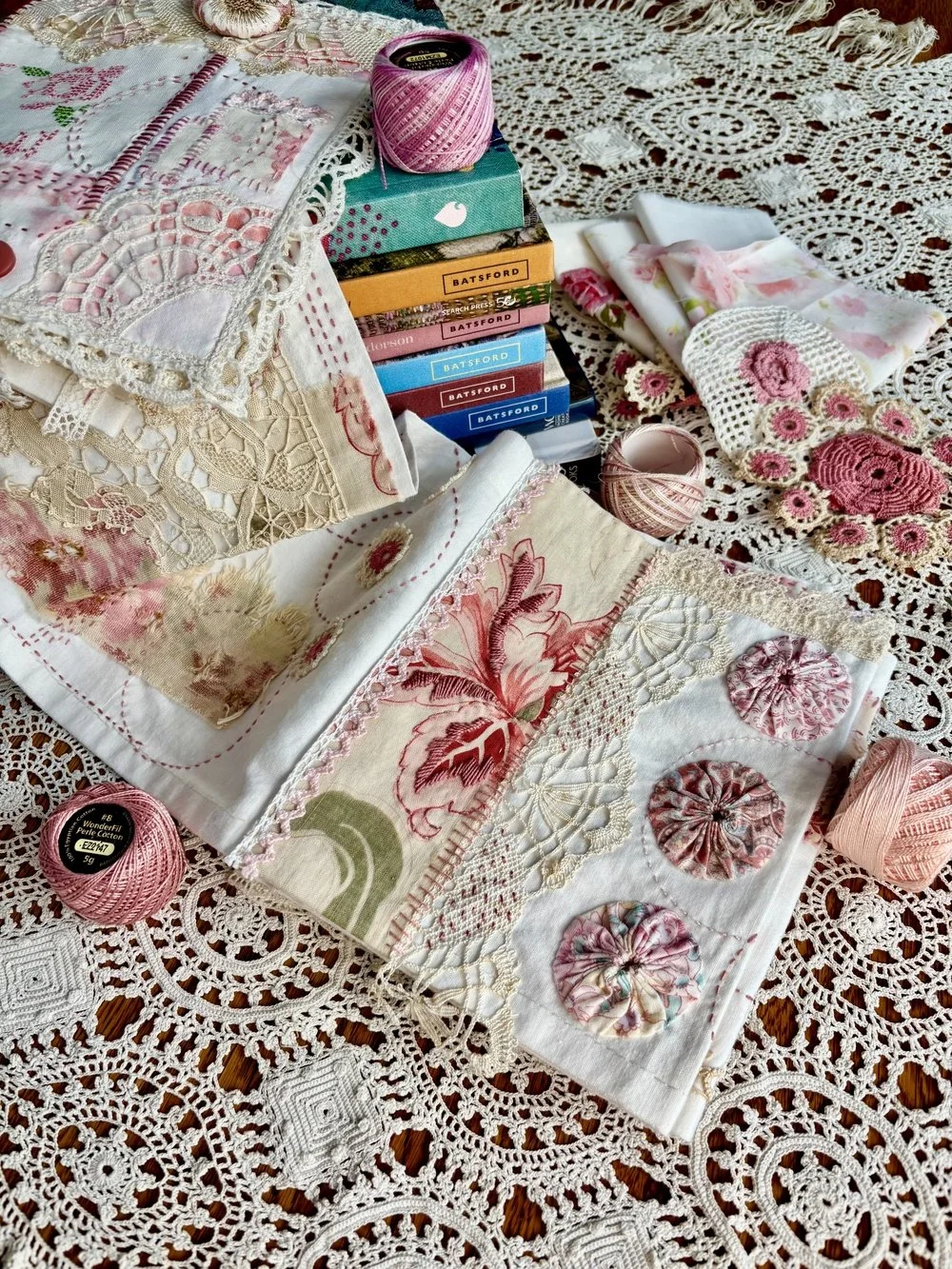
Ana’s concertina book, all about pink.
Only What She Loves
At some point, Buzzalino sat down and looked honestly at the classes she was offering. Some of them she no longer wanted to teach—so she cut them.
“I went through my list of classes and I got rid of everything that I do not want to teach again,” she says. “If I’m not enthusiastic about it, I can’t make someone else enthusiastic about it.”
What she loves, right now, is the concertina book—because it can hold almost anything, and because her students, many of whom have never made a book before, leave holding something entirely their own. The format asks something of the person who holds it, too. You can’t flip through a concertina the way you’d skim a page. You have to open it, panel by panel, and let it tell you what it contains.
“You can tell your own story,” she says. “Everybody has a story to tell. And it doesn’t have to be about old lace and vintage fabric—you can use anything you have at home to make your concertina book your own.”
The materials for Buzzalino’s Stories Folded in Cloth workshop at the Estelle Center for Creative Arts are intentionally simple. Basic stitches. And rather than requiring students to purchase a kit, she invites them to bring what they already have—fabric from a stash, lace tucked in a drawer, heirloom scraps they’ve been saving without knowing what to do with them. The barrier to entry, by design, is low. The emotional stakes, by nature, are not.
“The story is mine,” she says. “It may be that it doesn’t make sense to anybody else. But the stories are mine.”
Stories Folded in Cloth Online Workshop with Ana Buzzalino runs February 6, 2027, 9 am–3:30 pm MST, $200. All skill levels welcome.
Marilyn Heywood Paige is the marketing director for the Estelle Center. This blog won the 2025 DotComm award for Best New Arts Blog. She has also won two Hermes Creative Awards in 2026--a gold award for non profit branding and promotion work, and a platinum award for logo design.